
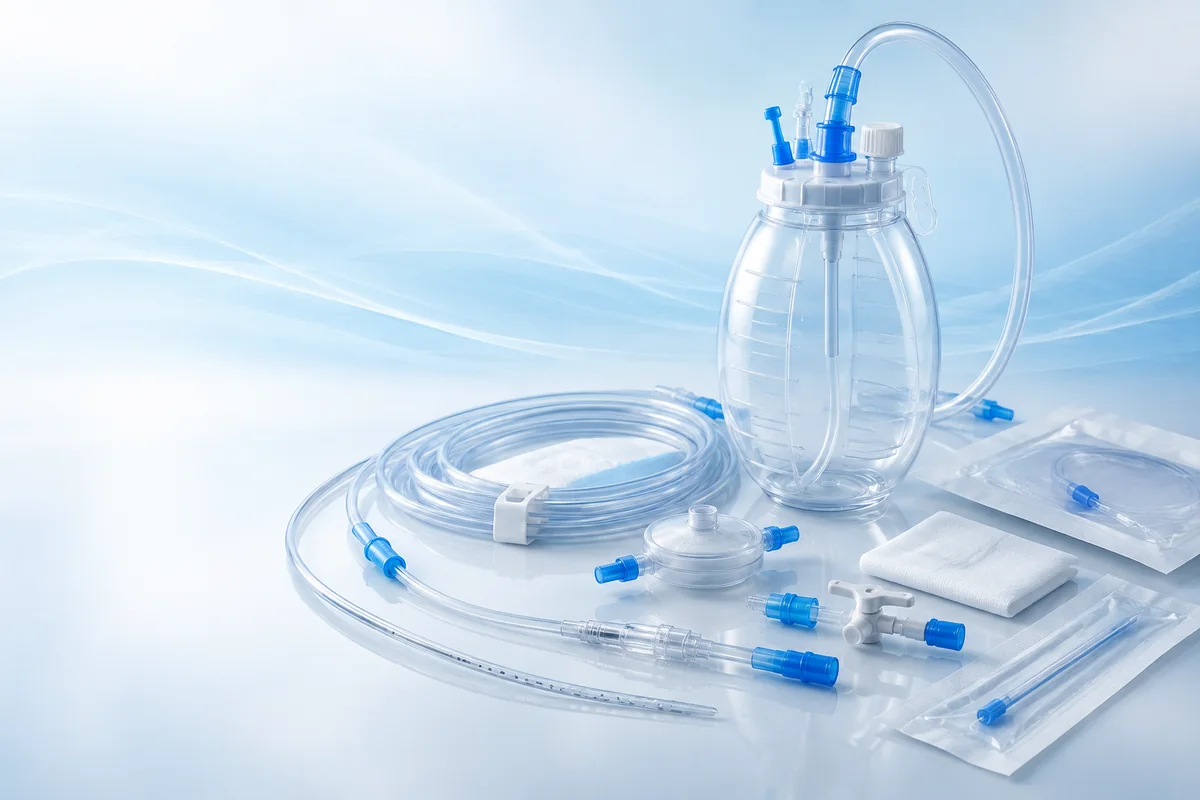
Surgical drainage products may look straightforward, but a dependable drainage solution is the result of several components working together. Tubing, reservoirs, connectors and fixation details all influence how a system is prepared, handled and integrated into a clinical workflow. For hospitals, distributors and medical-device buyers, evaluating the complete configuration is therefore more useful than reviewing one component in isolation.
What a surgical drainage system is designed to do
A surgical drainage system provides a controlled path for fluid to move from the intended drainage site to a collection component. The exact design varies by clinical application and product specification. Some configurations emphasize compact collection, while others require longer tubing, different connector arrangements or a particular reservoir style.
Clinical selection must always follow the device instructions for use, applicable regulations and the healthcare provider’s protocols. From a procurement perspective, the priority is to confirm that the proposed product configuration matches the intended application and documentation requirements.
Core components to review
Drainage tubing
Buyers should review tube length, diameter, flexibility, connection method and any required markings. These details affect compatibility with the other parts of the system and should be confirmed before samples or quotations are finalized.
Collection reservoir or bag
The collection component should be evaluated as part of the complete system. Capacity, port arrangement, connection security and packaging format are common specification points. If several reservoir options are available, the target application should be clearly communicated to the supplier.
Connectors and accessories
Small components deserve careful attention. Connector geometry, clamps, valves, adapters and fixation accessories can determine whether a selected configuration works as expected. A clear bill of materials helps prevent missing or mismatched parts during purchasing.
A practical purchasing checklist
- Define the intended product category and target configuration.
- Confirm required dimensions, capacity and component combination.
- Review packaging, labeling and documentation needs.
- Ask for clear product images and a component list.
- Evaluate samples before confirming a larger order when appropriate.
- Record any OEM, packaging or specification requirements early.
Why configuration clarity matters
Many purchasing delays begin with incomplete specifications. A request that only says “drainage set” may not define the tube, reservoir, connector and packaging combination required. Sharing reference dimensions, target quantities and intended configuration at the beginning allows the manufacturer to respond more accurately.
Baiying Medical offers general surgical drainage products together with matching components and consumables. Buyers can browse the current portfolio or discuss a specification-based requirement with our team.
Discuss your drainage product requirements
When contacting Baiying Medical, include the product type, configuration, quantity, destination market and any packaging or documentation requirements. This information helps our team identify the most relevant products and prepare the next steps efficiently.
Explore the product portfolio or email 1812861293@qq.com for product information.
This article is intended for general product and procurement information. It does not replace product instructions, clinical judgment or applicable regulatory requirements.